Measure the outside, at its widest points
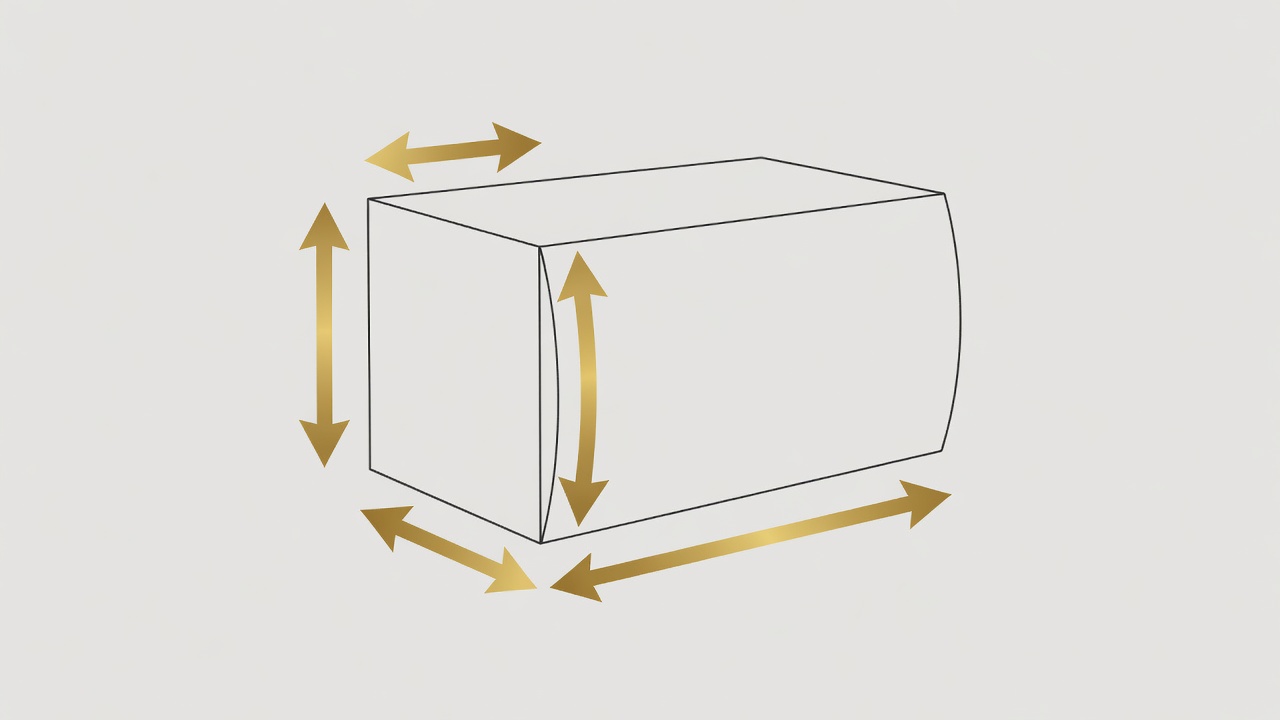
Place the sealed parcel on a level surface. Measure its three outside dimensions with a rigid ruler or tape, including protrusions and bulges. Carriers commonly call the longest side the length, but follow the booking form’s own definitions. Do not copy dimensions printed on a box if they describe its internal capacity.
Keep units consistent. A measurement in inches entered into a centimetre field can produce a quote that is not valid for the actual parcel. Follow the provider’s rounding instructions rather than rounding down to stay below a limit. If your box is close to a maximum, allow for measurement differences and choose packaging that comfortably qualifies.
Understand actual and volumetric weight
Actual weight is the reading from a suitable scale after packing. Include the box, cushioning, tape, label and any external document pouch. Check the scale’s capacity and resolution, and make sure the whole parcel is supported without touching another surface. A household scale may be unsuitable for a small parcel near a service threshold.
Volumetric, or dimensional, weight is a way of accounting for space in the transport network. A common method multiplies length, width and height, then divides by a service-specific factor. The units, factor, rounding and applicability are not universal. Many services charge using the higher of actual and volumetric weight, but you must verify the exact rule for the product you select.
Check more than the longest side
Some services apply a combined length-and-girth limit. For a rectangular box, girth is commonly twice the sum of the two shorter sides; the carrier may then add the longest side. Other products use maximum volume, individual side limits or special rules for tubes and irregular shapes. Each condition matters independently.
Oversize, non-conveyable and additional-handling categories can also change price or eligibility. A parcel may be below the stated weight limit and still trigger a surcharge because of its shape, packaging or dimensions. Ask how a cylindrical or unusually shaped item should be measured before buying a label.
Build protection around the contents
Use a strong outer carton suitable for the item’s weight and fragility. A retail presentation box is not automatically a shipping carton. Reused packaging should be clean, dry and structurally sound, with no weakened corners or compromised seams. Choose enough room for effective cushioning without creating a needlessly large empty box.
Wrap fragile items separately and stop them from contacting one another or the outside walls. Fill voids with material appropriate to the contents so movement is restricted. Heavy objects need packaging that resists shifting and puncturing; delicate surfaces may need a non-abrasive inner layer. A “fragile” sticker does not replace protective packing or create special handling rights.
Liquids, powders, batteries and dangerous goods need specific assessment. A leakproof bag or extra tape does not make a restricted item acceptable. Follow the carrier’s commodity rules and, where relevant, specialist dangerous-goods instructions. If you cannot establish compliance, do not hand over the parcel.
Seal, label and record
- Seal the carton with suitable parcel tape across the main seams.
- Remove or fully obscure old addresses, routing labels and barcodes.
- Place the new label flat on a clear face, away from edges and seams.
- Keep barcodes readable; avoid folds, glare and tape that obscures printing.
- Record the final weight and dimensions, then photograph the packing and exterior.
Retain receipts for the contents and keep photographs securely if you may need them for a claim. Packaging requirements and excluded items vary, and inadequate packing may affect compensation. The carrier’s current acceptance conditions take precedence over general advice.
Now that the physical parcel is defined, compare eligible services using those exact measurements. For a cross-border journey, continue with the documentation guide before printing your final label.